
Sometimes, people ask me why I write historical fiction. “Why such a difficult genre?” they ask, which in itself makes me a tad irritated, as historical fiction, IMO, is not a genre – it’s an umbrella under which all other genres coexist. In essence, the “historical” in historical fiction merely indicates that the story is set in a non-contemporary time. It says nothing about the content as such, albeit that many people seem to think historical fiction is defined by blood and gore and thousands upon thousands dying in one battle or other.
Yes, that stuff happens in historical novels. It also happens in contemporary novels – it happens in real life around us on a daily basis. There are historical novels that are essentially love stories, there are others that are coming-of-age stories, yet another author delivers a well-crafted thriller set in distant times, and quite a few produce so called cosy mysteries a la Miss Marple. As long as all these very different books are set in the past, they end up labelled as historical fiction – and considered comparable. Obviously, they are not.
I write books set in the past because I am something of a history geek. Since I was old enough to read for myself, I have submerged myself in stories set in the past – no matter genre – because I wanted to pretend I was there, in an era very distant from my own. Escapism in its purest form, one could say.
And yes, I spend very many happy hours researching my chosen setting – at times resulting in tangential excursions that bring no value whatsoever to my WIP, but expand my soul and enrich my life in general. After all, who doesn’t want to know that Peter the Great married a low-born, illiterate commoner? Or that Eleanor of Castile had a half-brother, Felipe, already a bishop when he threw his ecclesiastic career out of the window to marry a Norwegian princess?
Neither here nor there for the purpose of this post – except to highlight that I am as happy as a calf in a field of juicy clover writing historical fiction.
You can research your setting and the era you’ve chosen until you’re blue in the face. That in itself will not result in a page-turning novel. In fact, sometimes too much research produces a major info-dump instead – you know, books in which the author expends pages and pages on showcasing their own knowledge of the period, thereby effectively killing pace.
A skilled writer of historical fiction inserts DETAILS, not paragraphs. A skilled writer – no matter genre – also knows that if you want the story you write to resonate with the reader, your novel must deliver some sort of insight into the commonalities of being human. Therefore, for a novel to come alive, it requires characters that are vibrant and complex, real enough to step out of the pages, no matter if they ever existed or not.
People have not changed all that much through the centuries. We are still needy creatures, both on a physical and emotional level. Think Maslow, and I guess we all agree humans have physiological needs, a desire to feel safe, to belong. We do in this day and age, they did back in historic (and pre-historic) times as well.
It is therefore a safe bet to assume human emotions and reactions are relatively constant throughout the ages. Someone betrays you, the visceral rage you feel is probably identical to the one your 12th century ancestor felt when he realised he’d been set up. Loving someone probably feels the same – maybe with the caveat that these days, we consider it a borderline human right to be loved and love. Back in the darker and grimmer eras that precede ours, love was something of a luxury: if you had food and a roof over your head, if you were safe and your children set up for surviving, you could live with not falling into throes of passion at the sight of your husband/wife. Truth is, you didn’t EXPECT to love your spouse – you married for reasons on the lower lever of the Maslow pyramid. But this doesn’t preclude that IF you fell in love, it would feel exactly the same way as it feels today.
All of us have personal experience of feelings and emotions. As these are the most important aspects to convey in a novel, we could all, potentially, carry a budding writer within. There is, however, a major difference between experiencing an emotion and describing it – plus, once again, it is a fine balancing act between describing too much and too little. Readers enjoy filling in the blanks. Writers don’t want them to fill in the blanks with the wrong stuff, so writers have to leave enough hints to steer the reader in the right direction. This is the major difference between “show” and “tell” writing – as in “She was so devastated and confused she had no idea what to do next” (the writer informs – tells – the reader of what the protagonist is experiencing) or “She couldn’t quite focus: her hands shook, her mouth was the texture of paper, her brain a total blank” (the writers presents the protagonist’s reactions which the reader analyses before concluding she is in a bad way, probably in some sort of shock).
Whatever the case, it is my opinion that to write a novel one must be fascinated by humanity, in all its diverse forms. It is only by presenting the reader with a mirror in which they can recognise their own emotions that a writer succeeds in hooking them. And once the reader has swallowed the bait, it doesn’t really matter if the book is set in the future, the past or the present. What matters is that the reader is willing to take a ride through the imagined landscapes produced by the writer, hand in hand with the protagonist.
Write what you love, they say. And I do, combining my endless curiosity as to what makes people tick with my love for the past. Do I write historical fiction? I guess I do – but more importantly, I write novels that explore the human condition. An exercise in self-exploration? Maybe. An attempt to exorcise personal experiences? Rarely. A fulfilling experience? Always.
 Us creative types have somewhat sensitive egos. We invest so much of ourselves in our creations that we can’t quite separate our work from ourselves, leaving us very prickly when it comes to criticism.If the critic says “this was a bad book”, the sensitive writer will rationally tell themselves that one can’t please everyone, but inside, our fragile author will be weeping blood at being so brutally rejected.
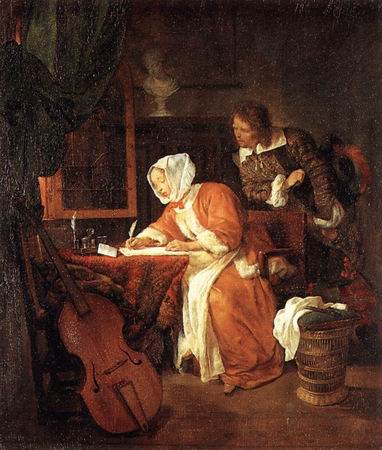 “Who is she?” Matthew asked, peering over my shoulders.
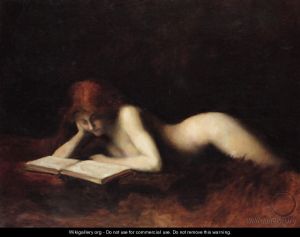
 The other day, I was feeling a bit wilted around the edges. Best cure for that is to curl up somewhere and escape into a book. Quite often, I’ll opt for a book set in the past, one of those books that combines blood and gore with courtly love and honourable men (like my own books, come to think of it. But I cannot read my own books to escape: I end up using a red pen and doing further corrections…)
 Ms Day does write historical romances – quite adeptly, I might add – but it is her Crossfire books that I return to time and time again. A male protagonist burdened by his past encounters an equally scarred young woman. Sparks fly, and just like that, Eva and Gideon grow into my heart. Eva is no retiring violet – but her past haunts her. It is Gideon who saves her from her past, and she in turn takes on the task of freeing this man from the shadows of his childhood. Two damaged people trying to heal each other – a somewhat combustible combo, all of it delivered in well-paced prose, generously laced with hot, steamy sex scenes.
 None of the above crosses my mind when I retreat into my escapist bubble. In my bubble, all I want is to be entertained, dragged out of my reality which, at present, sucks. Any writer who can create an illusion strong enough to yank me out of the here and now has, IMO, done their job. Kudos to them, I say.
 Sometimes, things happen that sort of whack Ms Inspiration senseless. It may be too much work (but that rarely fazes my Ms Inspiration, who just snorts, shakes out her long and colourful skirts and tells me not to whinge but get on with it) it may be life in general. Or, in some cases, Ms Inspiration decides she needs a long vacation and scoots off somewhere else entirely. Knowing Ms Inspiration, she’s likely hiking the Annapurna ring or paddling up the Amazon or doing some mountaneering in the Rockies. (Ms Inspiration is not only my muse. In some ways, she’s my alter ego, all the way from her long, dark curly hair to her dainty Victorian half-boots)
 What any of the above has to do with my lack of words, I don’t really know – beyond concluding that by writing about this, I suddenly seem to have recouped some of my capacity for verbal expression.
 timelightcom